 news
Admin · 2026-11-08 13:26
Photo studios are already closing down. Which one will be next? Artificial intelligence is beginning to transform the entire photography industry
How is artificial intelligence affecting photographers, models, makeup artists, stylists, and the advertising industry? Real-world examples, verified statistics, and forecasts for 2027–2030.
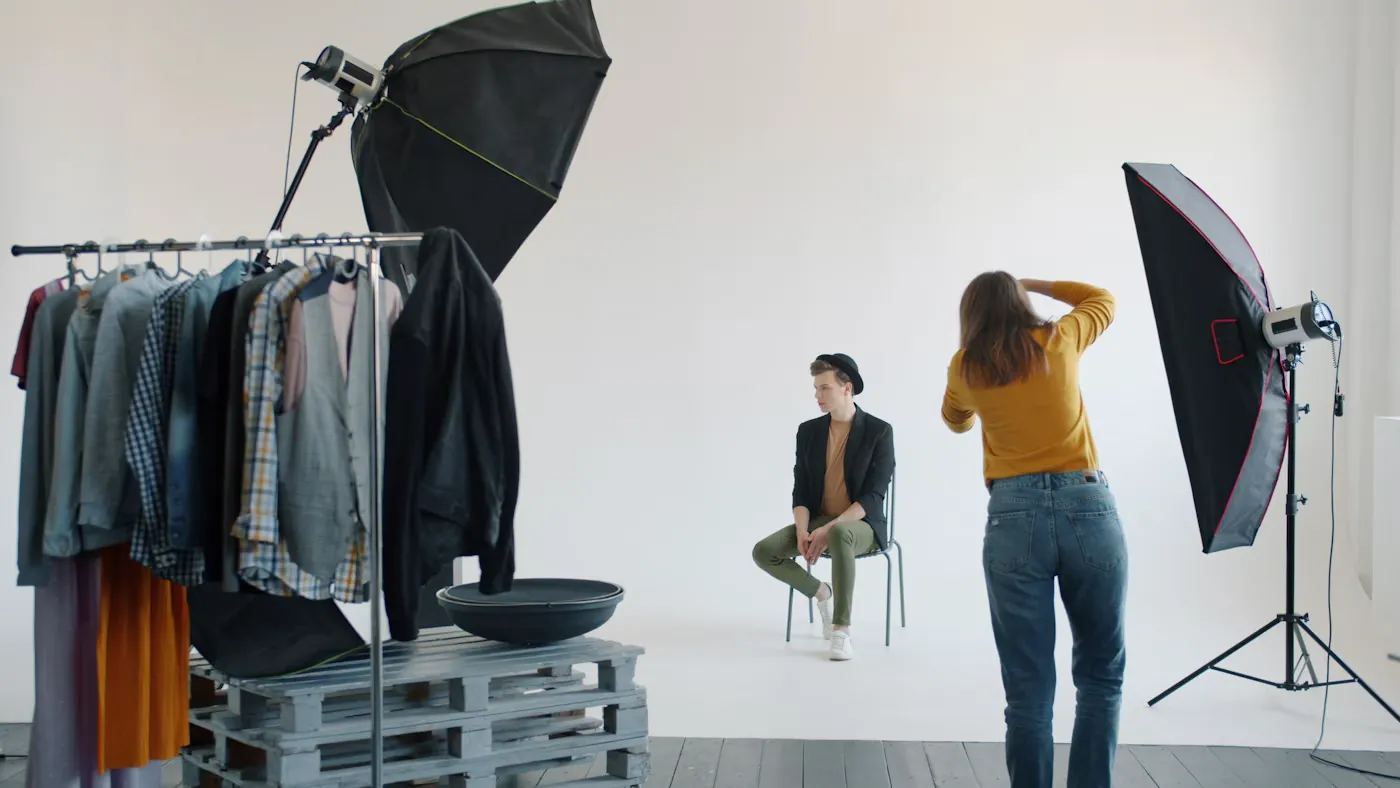
A traditional fashion photo shoot with a photographer and a model. Photo: Vitaly Gariev / Unsplash.
Just a few years ago, it seemed unimaginable that the world’s largest fashion companies would abandon traditional photo shoots. Today, it’s already happening. Photo studios are closing, models are losing jobs, but artificial intelligence can complete in just a few minutes a task that used to require an entire team of professionals.
On October 27, 2026, the international news agency Reuters published an investigation into the impact of artificial intelligence on the fashion industry. A day later, the photography website PetaPixel published an article titled Photo Studios Are Closing as the Fashion Industry Embraces Generative AI.
The main message was clear: the closure of photo studios due to artificial intelligence is no longer just a theoretical future scenario.
It is already a reality.
Numbers Shaking Up the Photography Industry
340+ Jobs cut during Zalando’s restructuring | 90% Reported reduction in production costs by ABOUT YOU |
58% Of photographers surveyed report losing their jobs due to AI | 8 million EUR+ Annual savings reported by ABOUT YOU |
Sources: Reuters, ABOUT YOU, and the Association of Photographers. The figures refer to specific companies or surveys, not the entire global market.
Zalando Closes Photo Studios in Berlin
One of the most striking examples is the European fashion e-commerce giant Zalando.
According to Reuters, Zalando closed both of its photo studios in Berlin in 2025, while rapidly expanding the use of artificial intelligence in the production of commercial images.
ABOUT YOU, a company acquired by Zalando, also closed its photo studio.
In total, Zalando cut more than 340 jobs, although some employees were retained in other positions. There is no basis for claiming that all of these positions were eliminated solely because of AI; however, artificial intelligence is a significant part of the company’s restructuring of content production.
And here it’s important to understand one thing: a photo studio isn’t just a room with a camera and lights.
Behind every professional fashion photo shoot, there’s often an entire team:
- The photographer and his or her assistants.
- Professional models and modeling agencies.
- Makeup artists and hairstylists.
- Fashion stylists and wardrobe specialists.
- Producers and technical staff.
- Retouchers and post-production specialists.
- Companies that rent out studios, lighting, and equipment.
When a company opts out of a traditional photo shoot, it’s not just one photographer who stands to lose work, but several interconnected professionals.
That’s why these changes extend far beyond photography itself.
90% lower costs: why are companies choosing AI?
In July 2026, ABOUT YOU unveiled SCAYLE STUDIOS—an artificial intelligence platform for producing fashion and lifestyle images.
The process is simple. A company uploads a product image, selects a digital model, an outfit, a pose, and a setting. The system generates images that can be used in online stores and advertisements.
There’s no need to book a photo studio, organize a casting call, hire models, or wait several weeks.
ABOUT YOU reports that:
- Approximately 90% of its e-commerce production uses AI-powered workflows.
- Production costs have decreased by approximately 90%.
- The time it takes for images to be ready for sale has been reduced by more than 95%.
- The company saves more than 8 million euros annually on studio and editorial content costs.
These are results published by the company itself and do not constitute a universal guarantee for all photography companies.
Figure 1. Traditional Image Production vs. AI
Comparative Cost Index. Traditional production = 100.
Traditional photo studio – 100
AI workflow – approximately 10
The chart illustrates the approximately 90% cost reduction reported by ABOUT YOU. This is not a universal price list.
If producing comparable content using traditional methods would cost a company 1,000 euros, then with this reduction, the cost of the AI workflow would be approximately 100 euros.
This cost difference is one of the main reasons why large e-commerce companies are beginning to rethink their traditional photo shoots.
An even more serious threat: AI-generated images can also sell better
ABOUT YOU also published the results of its A/B tests. According to the company’s data, AI-generated images outperformed traditional studio content in terms of commercial results in these specific tests.
Chart 2. Commercial results reported by ABOUT YOU
Growth in gross merchandise value: +9.2%
Growth in add-to-cart rate: +5.1%
Bar lengths are shown on a scale from 0% to 10%. The results are A/B test data published by ABOUT YOU and do not represent industry-wide metrics.
These results are particularly significant. If a company sees an opportunity to simultaneously reduce costs and improve sales, traditional photo shoots are finding it increasingly difficult to compete based on visual quality alone.
58% of photographers are already reporting lost orders
In January 2026, the Association of Photographers, a British professional organization, published the results of a survey that revealed the growing impact of artificial intelligence on professionals in the industry.
Approximately 600 members of the organization participated in the survey.
58% of respondents indicated that they had already lost work assignments due to generative artificial intelligence.
While this figure does not reflect the experience of all photographers worldwide, it does reveal a clear trend in the professional commercial photography market.
The jobs most at risk are those in which the client simply needs an appealing visual image, rather than documentation of an authentic event or a specific person.
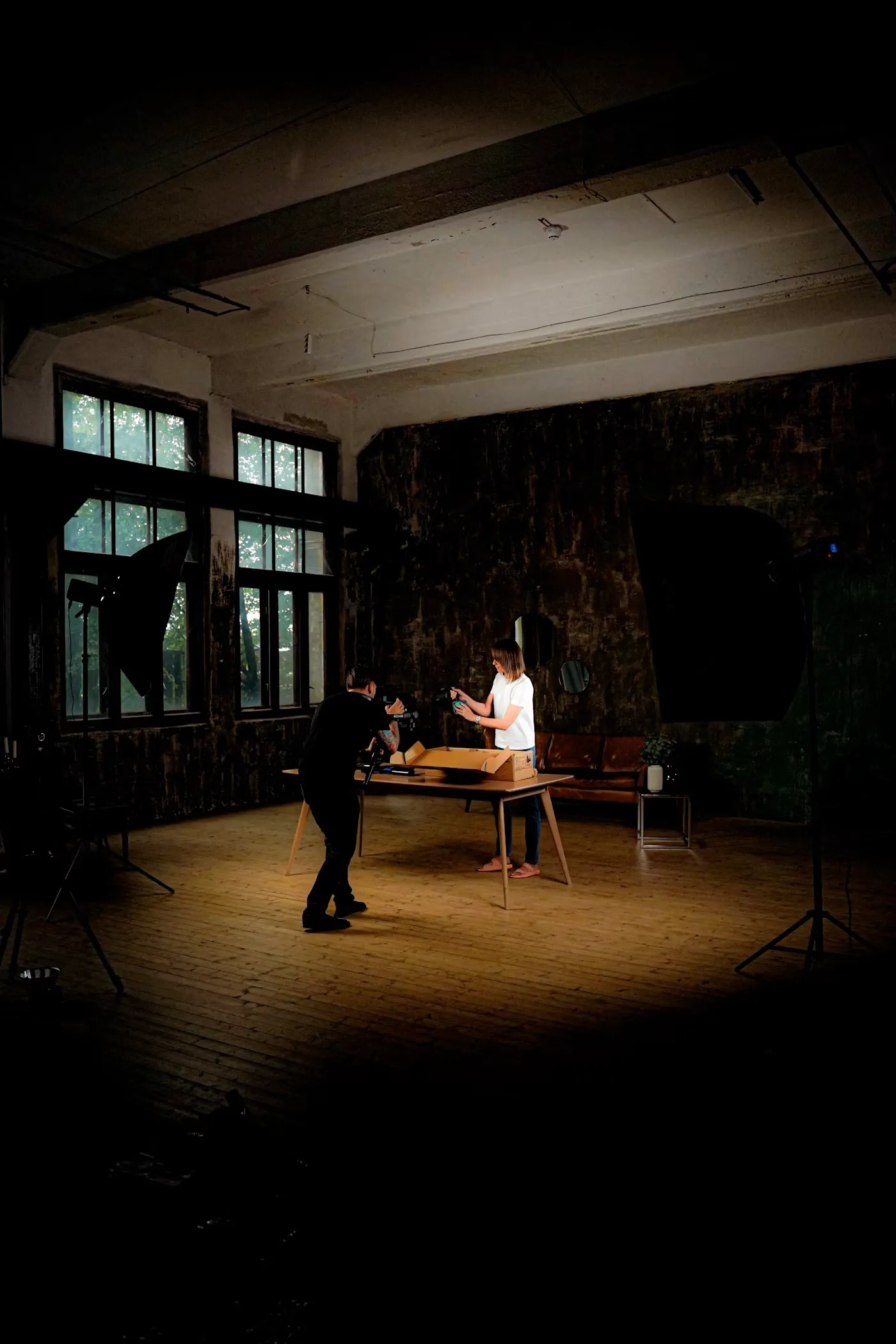
Production of product content in a studio. Photo: Ansis Kančs / Unsplash.
Which creative professions are most at risk from AI?
Based on current technological developments, commercial trends, and corporate decisions, it is possible to assess in which areas the number of traditional commissions might decline in the coming years.
| Industry | Risk | Potential Changes |
|---|---|---|
| Fashion catalog photo studios | Very high | Fewer traditional photo shoots |
| Simple retouching services | Very high | Automation and falling prices |
| Standard stock photography | Very high | Competition from generated content |
| Product catalog photography | High | Hybrid production processes |
| E-commerce model services | High | Fewer catalog orders |
| Advertising content studios | High | AI-generated campaign variations |
| Makeup artists for commercial photo shoots | Moderately high | Fewer jobs in synthetic campaigns |
| Standard business portraits | Medium | Competition from AI portraits |
| Event and wedding photography | Relatively lower | Important documentation of real events |
The table represents an editorial risk assessment, not a statistically calculated probability of business closures.
Product and stock photography: the greatest pressure on prices
One of the first areas where AI can significantly reduce the number of traditional photo shoots is product catalog photography.
Clothing, footwear, accessories, and various household items have been photographed according to standardized principles for years.
Different product colors, uniform backgrounds, repetitive poses, and similar shots make up a large portion of e-commerce image production.
With the help of artificial intelligence, it is possible to capture a precise initial image of a product and create various advertising variations without having to reshoot.
However, the accurate reproduction of a real product’s colors, materials, and details remains important. This means that professional initial photography and quality control will continue to be in demand.
A similar situation arises in stock photography.
Generic images of smiling office workers, business meetings, technology illustrations, or fictional lifestyle scenarios can now be generated using AI.
However, AI cannot replace authentic photojournalism, images of historical events, and documentation of unique locations with equivalent evidence of actual reality.
The advertising video industry is also changing rapidly
Artificial intelligence is influencing not only photography but also video ad production.
According to a 2026 study by the Interactive Advertising Bureau, nearly two-thirds of surveyed digital video ad buyers are already using generative AI to create creative content.
The use of AI in ad production continues to grow.
Figure 3. AI Use in Digital Video Ad Creation
Approximate percentage of ad content created using generative AI.
2025 – approximately 25%
2026 – approximately 33%
2027 – projected at 43%
Source: IAB 2026 Digital Video Ad Spend Report. The chart also includes AI-assisted advertising content, not just fully synthetic content. The 2027 figure is a forecast.
This could mean fewer orders for simple ad shoots, product demonstrations, and repeated variations of social media campaigns.
However, interviews, documentaries, live events, and customer experience videos will still require authentic filming.
The Modeling Industry: Digital Doubles Can Work Without a Human
One of the biggest changes is the so-called AI digital doubles.
The technology allows for the creation of a digital representation of a real person, which can later be used to generate new images.
In its investigation, Reuters analyzed more than ten photo shoot contracts and interviewed 15 modeling agency executives.
Some contract drafts provided for extensive possibilities to use AI to alter models’ faces and bodies, create digital copies, or use the images for future technological purposes.
Several of the brands involved explained that the specific provisions were limited or experimental; however, they highlighted a significant problem.
If a model participates in a photo shoot once, can the company subsequently use her digital copy in hundreds of advertisements without paying her again?
What happens to the rights to the likeness of a person’s face? Is it permissible to alter a model’s age, body proportions, and physical appearance? Can a digital image be used in an advertisement that the model would not have consented to?
These questions will become increasingly important in the future.
At the same time, licensing digital doubles could also become a new source of income if the model controls the terms of use and receives fair compensation.
What will happen to makeup artists and hairstylists?
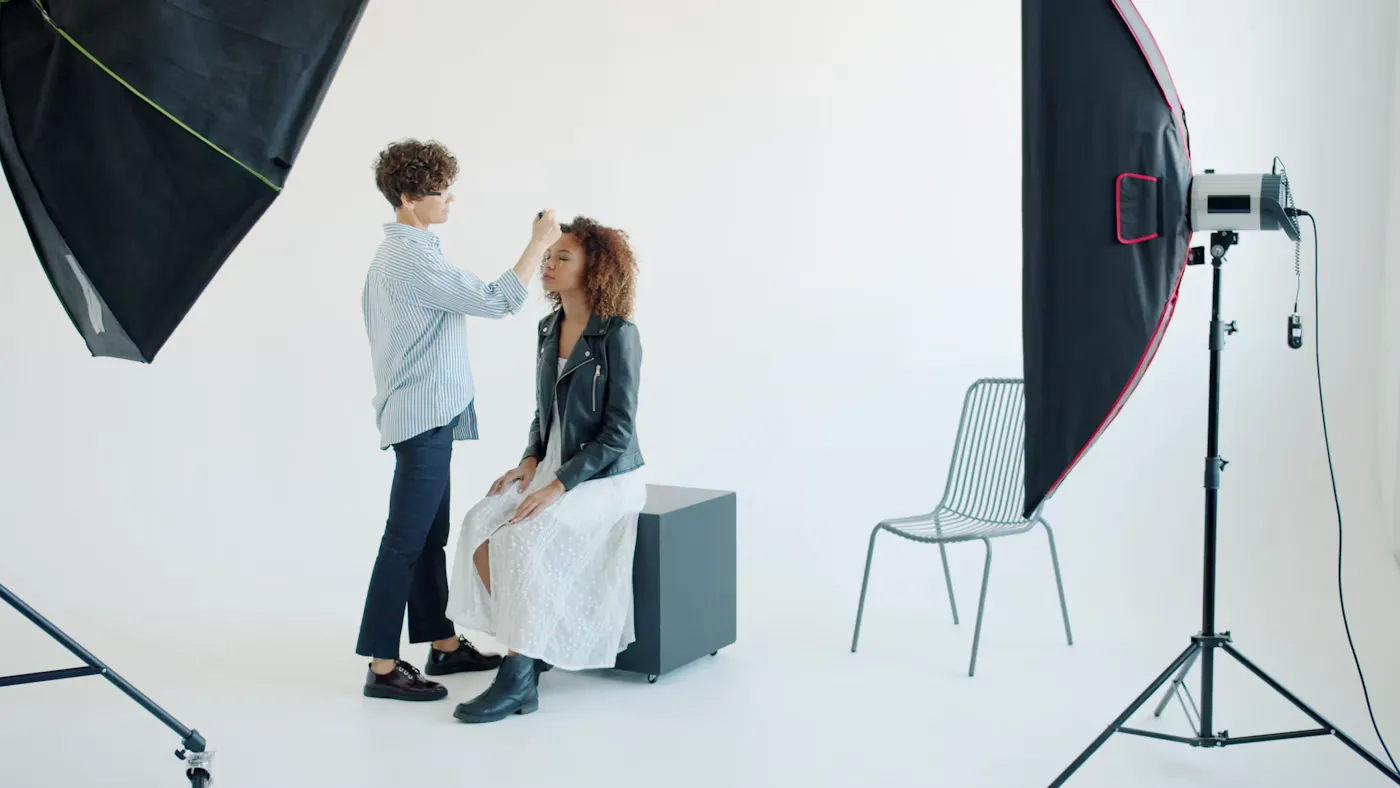
A makeup artist preparing for a photo shoot. Photo: Vitaly Gariev / Unsplash.
This is one of the professions whose vulnerability is rarely discussed.
If a fully digital model is used in an advertisement, there is no need to physically apply makeup, style hair, or prepare a person for a photo shoot.
AI can create various makeup styles, change hair colors, hairstyles, skin texture, and overall visual appearance.
As traditional fashion photo shoots decline accordingly, makeup artists working on commercial projects may also see a decrease in work.
However, there is a very significant difference here.
AI can draw makeup onto a photograph, but it cannot apply it to a real person.
A bride still needs professional makeup on her wedding day. An actor needs to be prepared for filming. A stage performer needs makeup that will last through the entire performance.
That’s why in-person beauty services may prove to be significantly more enduring than the work of makeup artists in mass-market synthetic advertisements.
In which areas of photography will professionals be the hardest to replace?
The most resilient areas of photography may be those where the primary value lies not only in the visual beauty of the image but also in the documentation of a real event or person.
- Wedding and family photography.
- Sports event photography.
- Concert and public event photography.
- Photojournalism and documentary photography.
- Authentic portraits of business leaders.
- Documentation of real products and real estate.
- Unique personal projects and fine art photography.
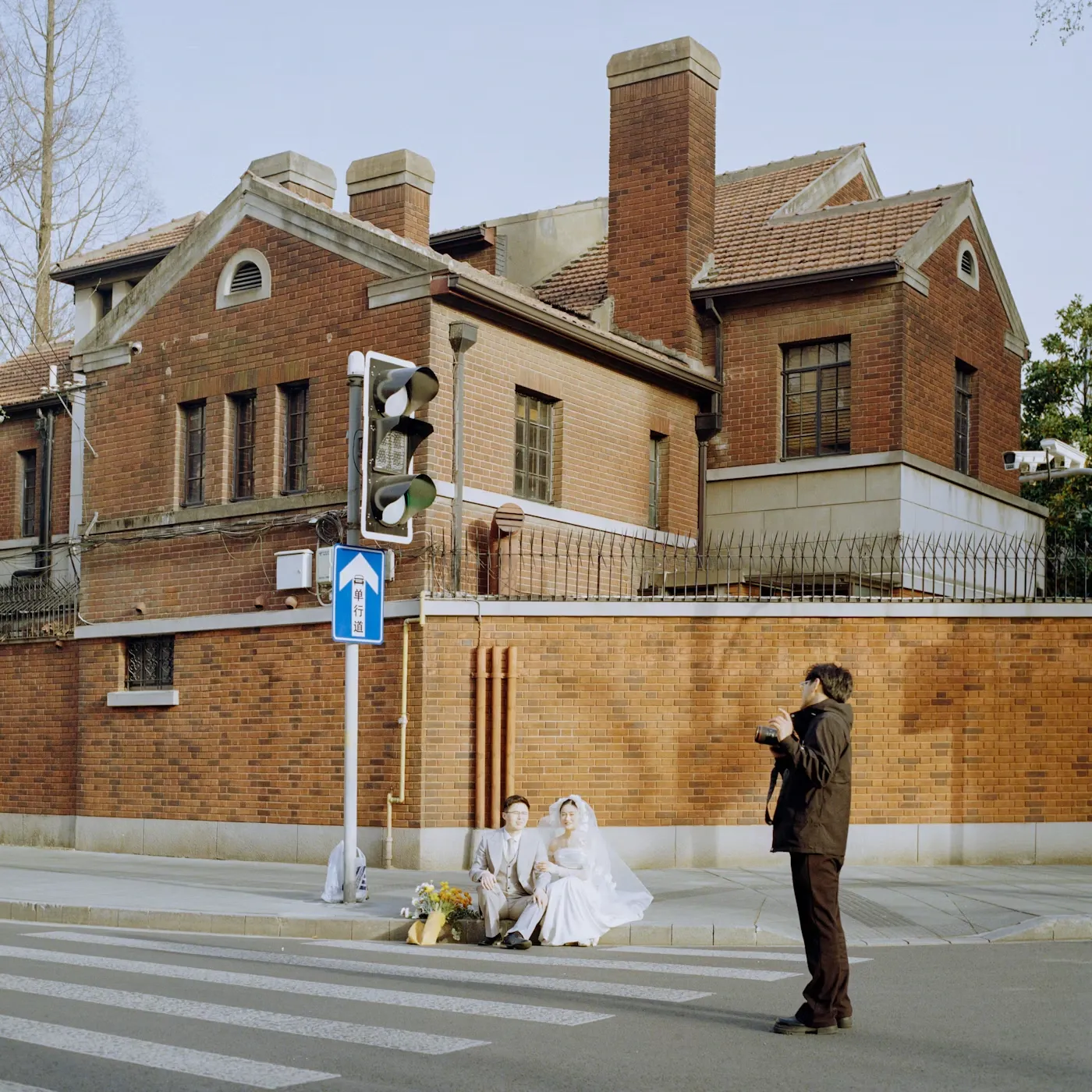
Photographing real events preserves their documentary significance. Photo: Rocky Xiong / Unsplash.
AI can generate an image showing an athlete with a medal, but it cannot replace authentic documentation of a specific athlete’s victory.
It can create a beautiful wedding scene, but not a genuine memory of a specific family’s wedding day.
It can create a convincing portrait of a company executive, but it does not, in and of itself, prove that this person was actually photographed.
This distinction may become one of the most important advantages of professional photography in the future.
The more AI-generated images there are, the more valuable authentic photography may become
Along with the development of artificial intelligence comes a new problem: the credibility of images.
If a computer can generate a believable portrait of a person, a news scene, or a visualization of an event in a matter of seconds, it becomes increasingly difficult to tell what has actually been photographed.
The Associated Press news agency reiterated in its 2026 editorial standards the prohibition on using generative AI to create or alter news photographs.
In the European Union as well, the transparency requirements of Article 50 of the AI Act took effect on August 2, 2026, which pertain to specific obligations regarding the labeling of synthetic content and the detection of deepfakes.
However, this does not mean that every commercially used image processed with AI must have a visible label. The obligations depend on the specific situation.
However, the direction the industry is taking is becoming clear: the origin, authorship, and authenticity of an image may become increasingly important.
In the future, photographers may have to sell not only the image itself but also the credibility of what that image documents.
Forecast: What Might Happen Between 2027 and 2030?
It is impossible to predict exactly how many photo studios will close. However, current market trends allow us to develop a plausible scenario.
| Year | Possible Changes |
|---|---|
| 2027 | Wider use of AI in catalog photography, retouching, advertising, and video. |
| 2028 | Some studios will restructure or merge; hybrid services will develop. |
| 2029 | Stronger price competition in the market for standardized images and advertising materials. |
| 2030 | A clearer distinction between the production of synthetic images and authentic professional photography. |
This is an analytical forecast, not a list of confirmed future events.
It is possible that the biggest changes will not come with loud announcements about photo studios closing.
They may manifest much more quietly: companies will simply stop commissioning as many small commercial photo shoots.
The number of images worldwide will continue to grow, but the number of traditional photo shoots in some industries may decline.
Practical Tips for Photographers, Models, and Makeup Artists
The development of artificial intelligence does not mean that creative professionals must give up their careers.
However, to remain competitive, it’s important to start thinking now about specialization, brand recognition, and new ways of working.
6 Tips for Photographers
1. Specialize in photography where authenticity matters
Event photography, documentary photography, sports, weddings, and authentic portraits of people can be more sustainable than mass-produced catalog photography.
2. Master AI as a tool
Use artificial intelligence for concept development, tailored post-processing, client presentations, and the automation of administrative tasks.
3. Develop your own unique photographic style
Technically beautiful images are becoming easier and easier to create. However, experience, creative thinking, and a recognizable personal style are much harder to replicate.
4. Diversify Your Income Sources
Combine photography with video, training, consulting, personal projects, or hybrid commercial services.
5. Protect your work and image usage rights
Verify how the client is permitted to use the photos, whether they can be modified using AI, and whether they are intended for use in training models.
6. Create a professional, publicly accessible portfolio
Don’t rely solely on Instagram and social media. Publish your projects, experience, areas of expertise, and contact information in a standalone portfolio as well.
5 Tips for Models
1. Carefully review digital likeness agreements
Find out whether the company is allowed to create an AI version of you, how long it can be used, and what compensation you’ll receive for future campaigns.
2. Develop your video and acting skills
Live communication, movement, emotions, and the ability to work professionally on set expand your collaboration opportunities.
3. Build your personal brand
A recognizable persona, a professional reputation, and the trust of your audience can be more important than just your visual appearance.
4. Don’t sell unlimited rights to your digital image without clear terms
A digital double can become a source of additional income, but the term of use, control, and compensation must be clearly defined.
5. Maintain a professional portfolio
Publish high-quality photos, video work, information about your experience, collaborative projects, and your availability for new campaigns.
5 Tips for Makeup Artists
1. Strengthen your position in in-person services
Wedding makeup, events, television, film, and stage work still require the physical presence of a professional.
2. Specialize in technically challenging techniques
Film special effects, long-lasting stage makeup, working with different skin types, and complex transformations require special expertise.
3. Showcase real results of your work
Post high-quality before-and-after photos, close-ups, and videos of your work process. Honestly disclose any retouching used so clients can assess the actual results.
4. Use AI to develop visual concepts
AI can help you demonstrate different makeup styles, create mood boards, and align ideas with clients before a photo shoot.
5. Build partnerships with photographers and models
A strong network of professional contacts allows you to attract more interesting projects and offer clients a well-rounded team effort.
All creative professionals share one common goal: to gain visibility
In the age of AI, it’s not enough to simply be good at your profession.
Clients need to be able to find you, view your work, and understand what sets you apart from other professionals.
A professional portfolio can help showcase your experience, distinctive style, publications, client testimonials, and collaboration opportunities.
Proportfolio.pro is a free platform for photographers, videographers, models, makeup artists, stylists, and other creative professionals.
There, you can create a public profile, upload your work, specify your specialization and contact information, so that potential clients can find professionals and get in touch with them.
Also available to an international audience is Proportfolio.pro.
In conclusion: photography won’t disappear, but its value will change
Artificial intelligence will most likely not replace all photographers, models, and makeup artists.
However, it is already changing the way companies commission and produce visual content.
Some traditional commercial services will become cheaper. Others may experience a significant drop in demand. Still others will take on new significance.
In the future, skills that are difficult for algorithms to replicate may become particularly valuable: working with real people, the ability to document unique events, creative thinking, personality, and professional reliability.
The easier it becomes to create any kind of image, the more important it will be to be able to create something that people truly trust.
Sources Used
- Reuters - Fashion’s AI Era: Face Swaps and Digital Clones (October 27, 2026).
- PetaPixel - Photo Studios Are Closing as the Fashion Industry Embraces Generative AI (October 28, 2026).
- ABOUT YOU - SCAYLE STUDIOS AI Production Results (July 20, 2026).
- PetaPixel - 58% of Photographers Have Lost Work to Generative AI (January 30, 2026).
- IAB - Digital Video Ad Spend & Strategy Report 2026.
- European Commission - AI Act, Article 50.
- Associated Press - Updated AI Newsroom Standards (July 23, 2026).
Illustrative photos: Vitaly Gariev, Ansis Kančs, and Rocky Xiong / Unsplash. The photos do not depict specific Zalando or ABOUT YOU closed studios.